



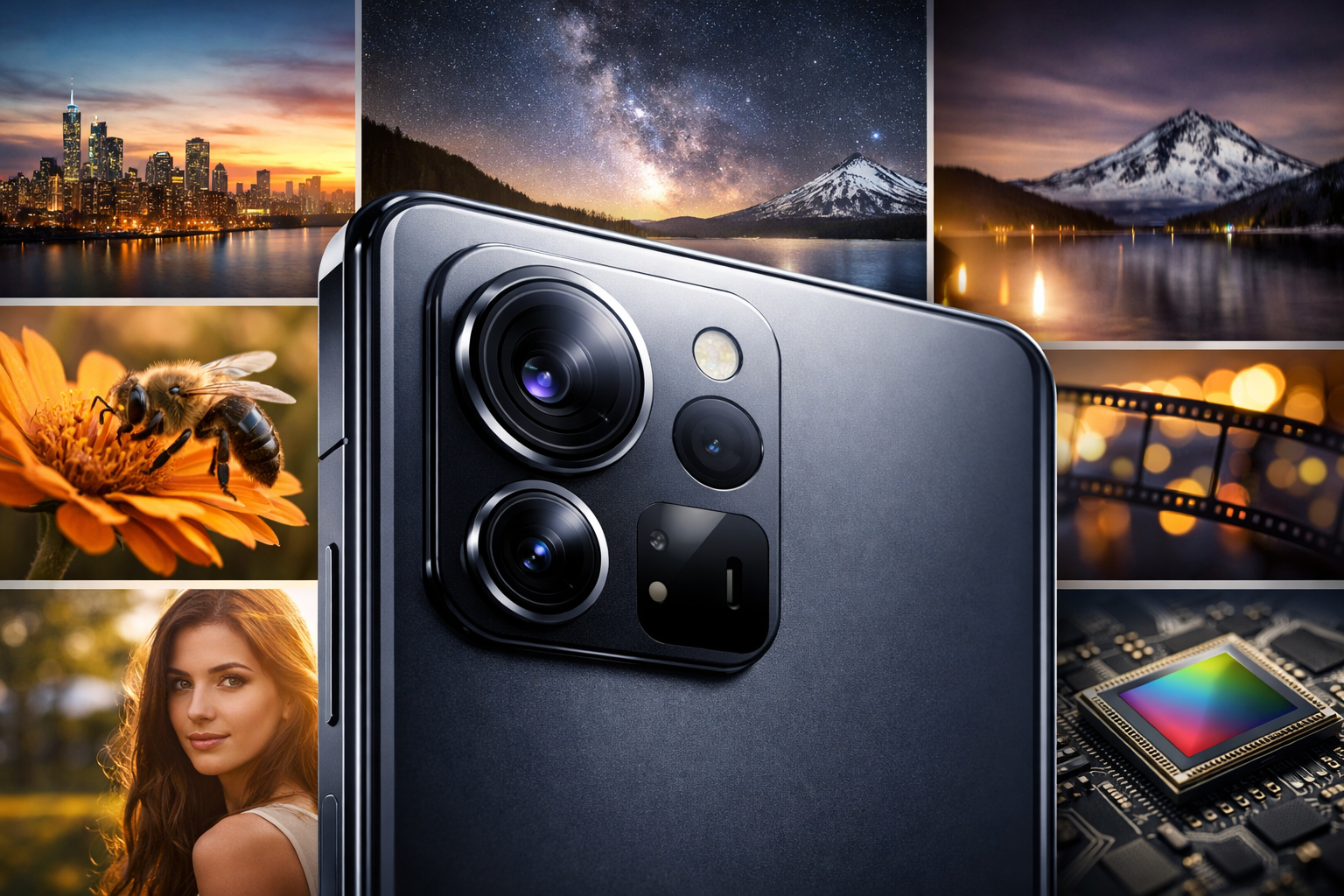
The best smartphone cameras aren’t built on a single feature. Instead, they combine hardware innovation, computational photography, and intelligent software optimization to produce consistently great results.
Key factors include:
- Advanced image sensors
- Computational photography and AI processing
- Lens quality and optical stabilization
- Low-light and night photography capabilities
- Video recording and stabilization technology
Let’s explore each in detail.
1. Advanced Image Sensors: The Foundation of Image Quality
At the core of every smartphone camera is its image sensor. Modern phones now use larger sensors with improved pixel technology, allowing them to capture more light and detail.
Why sensor size matters:
- Larger sensors improve dynamic range.
- Better light intake means cleaner low-light images.
- Improved depth perception for portraits
Many flagship phones now use pixel binning, combining multiple pixels into a single pixel for brighter, sharper photos without sacrificing resolution.
2. Computational Photography: Where Software Meets Art
What truly sets the best phone camera technology apart is computational photography. Smartphones don’t just capture images—they process them in real time using powerful algorithms.
Key computational features:
- HDR processing for balanced highlights and shadows
- Multi-frame image stacking for clarity
- Smart sharpening and noise reduction
- Scene recognition and optimization
This is why modern smartphones often outperform traditional cameras in challenging lighting conditions.
3. AI Camera Processing: Smarter Photos Without Effort
Artificial intelligence plays a major role in today’s smartphone photography. AI systems analyze scenes instantly and automatically adjust settings.
AI camera enhancements include:
- Accurate skin tones in portraits
- Improved subject detection (people, pets, food, landscapes)
- Enhanced color accuracy
- Real-time background blur adjustments
The best phone cameras use AI subtly—enhancing photos without making them look artificial or overprocessed.
4. Lens Technology and Optical Image Stabilization (OIS)
Even the best sensor needs excellent optics. Premium smartphones now feature multi-lens systems, each designed for a specific purpose.
Common lens types include:
- Wide lenses for everyday shots
- Ultra-wide lenses for landscapes and group photos
- Telephoto lenses for optical zoom
- Macro lenses for close-up detail
Optical Image Stabilization (OIS) is another crucial technology that reduces blur from hand movement, enabling sharper low-light photos and smoother video.
5. Low-Light and Night Photography Breakthroughs
Low-light photography is where smartphone cameras used to struggle the most. Today, night photography is one of their biggest strengths.
Modern night camera technology relies on:
- Multi-second exposure stacking
- AI-based noise reduction
- Intelligent white balance adjustments
- Improved sensor sensitivity
The result? Bright, detailed night photos without needing a flash or tripod.
6. Video Recording: Cinema-Level Quality in Your Pocket
The best phone camera technology isn’t just about photos—video has become equally important.
Top smartphones now offer:
- 4K and 8K video recording
- Advanced video stabilization
- Cinematic depth-of-field effects
- Professional color grading profiles
With features like real-time HDR video and advanced autofocus tracking, smartphones are now widely used for content creation, vlogging, and even filmmaking.
7. Front Camera and Selfie Technology
Selfie cameras have also seen massive upgrades. Modern front cameras benefit from the same AI processing and HDR enhancements as rear cameras.
Key improvements include:
- Natural skin tone rendering
- Accurate background blur
- Better low-light selfies
- High-resolution video calling
This makes smartphones ideal for social media, streaming, and professional virtual meetings.
How to Choose a Phone With the Best Camera Technology
When evaluating smartphone cameras, don’t focus solely on megapixels. Instead, look for:
- Consistent photo quality across lighting conditions
- Reliable autofocus and stabilization
- Natural colors and skin tones
- Strong video performance
- Software support and regular camera updates
A well-optimized camera system always beats impressive specs without proper processing.
The Future of Phone Camera Technology
Smartphone camera innovation is accelerating. Upcoming advancements are expected to include:
- Even larger sensors in slim designs
- More powerful AI image generation
- Improved optical zoom without bulky lenses
- Better real-time video enhancement
The gap between smartphones and professional cameras continues to narrow each year.
Final Thoughts: What Truly Makes the Best Phone Camera Technology?
The best phone camera technology isn’t about one standout feature—it’s about how everything works together. Sensors, lenses, AI processing, and software optimization all play equally important roles.