



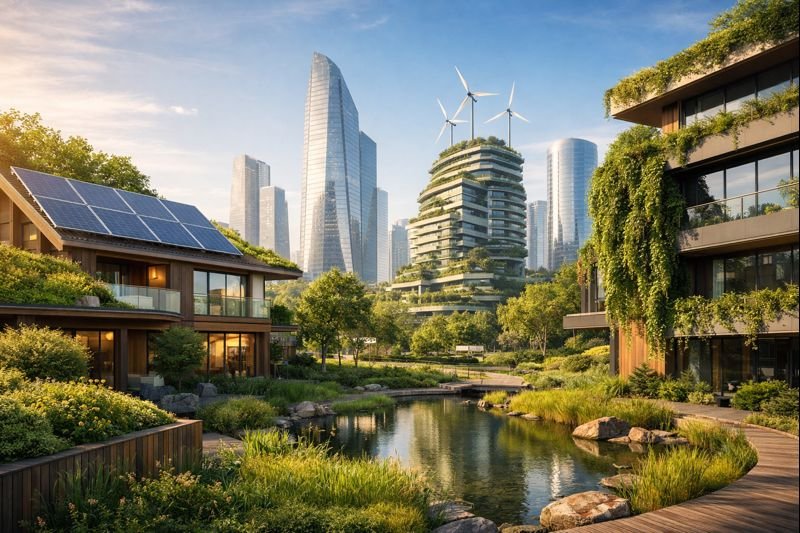
The idea of sustainable architecture is no longer limited to experimental structures or eco-aware households. It now plays a crucial role in how we create, build, and interact with the built world. Architecture must alter to balance human demands with environmental responsibility as urban growth, resource scarcity, and climate change intensify.
At its core, sustainable architecture focuses on minimizing negative environmental impact while maximizing efficiency, comfort, and long-term value. This approach reshapes not only how buildings look, but how they perform, age, and interact with the ecosystems around them.
What Is Sustainable Architecture?
Sustainable architecture refers to building design that reduces environmental harm throughout a structure’s entire life cycle—from planning and construction to operation and eventual reuse or demolition.
Rather than treating sustainability as an add-on, this philosophy integrates ecological thinking into every design decision. Materials, energy use, water management, indoor air quality, and site selection all play critical roles.
The simple but difficult objective is to build structures that meet current requirements without endangering future generations’ capacity to meet their own.
Core Principles of Sustainable Architecture
1. Energy Efficiency
One of the main factors influencing a building’s environmental impact is its energy usage. Sustainable architecture prioritizes passive design strategies such as:
- Optimal building orientation
- Natural daylighting
- Thermal insulation
- Cross-ventilation
These strategies reduce reliance on mechanical heating, cooling, and lighting systems, significantly lowering energy demand.
2. Sustainable Building Materials
Material selection has a massive impact on sustainability. Architects increasingly choose:
- Recycled or reclaimed materials
- Rapidly renewable resources like bamboo
- Low-VOC paints and finishes
- Locally sourced materials to reduce transportation emissions
Durability also matters—materials that last longer reduce waste over time.
3. Water Conservation
Water-efficient architecture incorporates:
- Low-flow fixtures
- Rainwater harvesting systems
- Greywater recycling
- Native landscaping that requires minimal irrigation
These solutions help conserve water while lowering operational costs.
4. Site Responsiveness
Sustainable architecture works with the land rather than against it. Respecting natural topography, preserving existing vegetation, and minimizing site disruption are essential for maintaining local ecosystems.
Why Sustainable Architecture Matters
Environmental Impact
A large share of global carbon emissions comes from buildings. Sustainable architecture directly addresses this by reducing energy use, lowering waste, and limiting resource extraction.
Economic Benefits
Although the initial cost of construction could be a little more, sustainable buildings usually provide:
- Lower energy and water bills
- Reduced maintenance costs
- Higher property value
- Longer building lifespan
Over time, these benefits often outweigh upfront investments.
Health and Well-Being
People spend most of their lives indoors. Sustainable buildings emphasize:
- Natural light
- Improved air quality
- Non-toxic materials
These factors contribute to better physical health, productivity, and overall comfort.
Examples of Sustainable Architecture in Practice
Green Roofs and Living Walls
Green roofs reduce urban heat, improve insulation, and manage stormwater runoff. Living walls enhance air quality while adding aesthetic value to dense urban spaces.
Net-Zero Energy Buildings
Net-zero buildings produce as much energy as they consume, typically by combining ultra-efficient design with solar or wind power.
Adaptive Reuse Projects
Repurposing existing structures—such as warehouses turned into offices or homes—preserves cultural heritage while minimizing construction waste.
The Role of Technology in Sustainable Architecture
Modern sustainable architecture relies heavily on innovation. Smart building systems monitor energy usage in real time, while advanced modeling software allows architects to predict performance before construction begins.
Technologies such as:
- Building Information Modeling (BIM)
- Smart sensors
- High-performance glazing
- Renewable energy integration
Enable data-driven decisions that improve sustainability outcomes.
Challenges Facing Sustainable Architecture
Despite its benefits, sustainable architecture still faces obstacles:
- Higher upfront costs
- Limited access to sustainable materials in some regions
- Lack of awareness or expertise
- Regulatory and zoning constraints
However, as demand grows and technology advances, these barriers continue to shrink.
The Future of Sustainable Architecture
The future of architecture is undeniably green. Governments, corporations, and individuals are increasingly prioritizing sustainability—not just as an ethical choice, but as a practical necessity.
Emerging trends include:
- Carbon-negative buildings
- Circular design principles
- Biophilic architecture that reconnects humans with nature
- Climate-resilient structures designed for extreme weather
Sustainable architecture is evolving from an option into a standard.
Conclusion
Sustainable architecture represents a fundamental shift in how we think about buildings and their role in the world. It shows that thoughtful design can support environmental stewardship, economic efficiency, and human well-being simultaneously.