



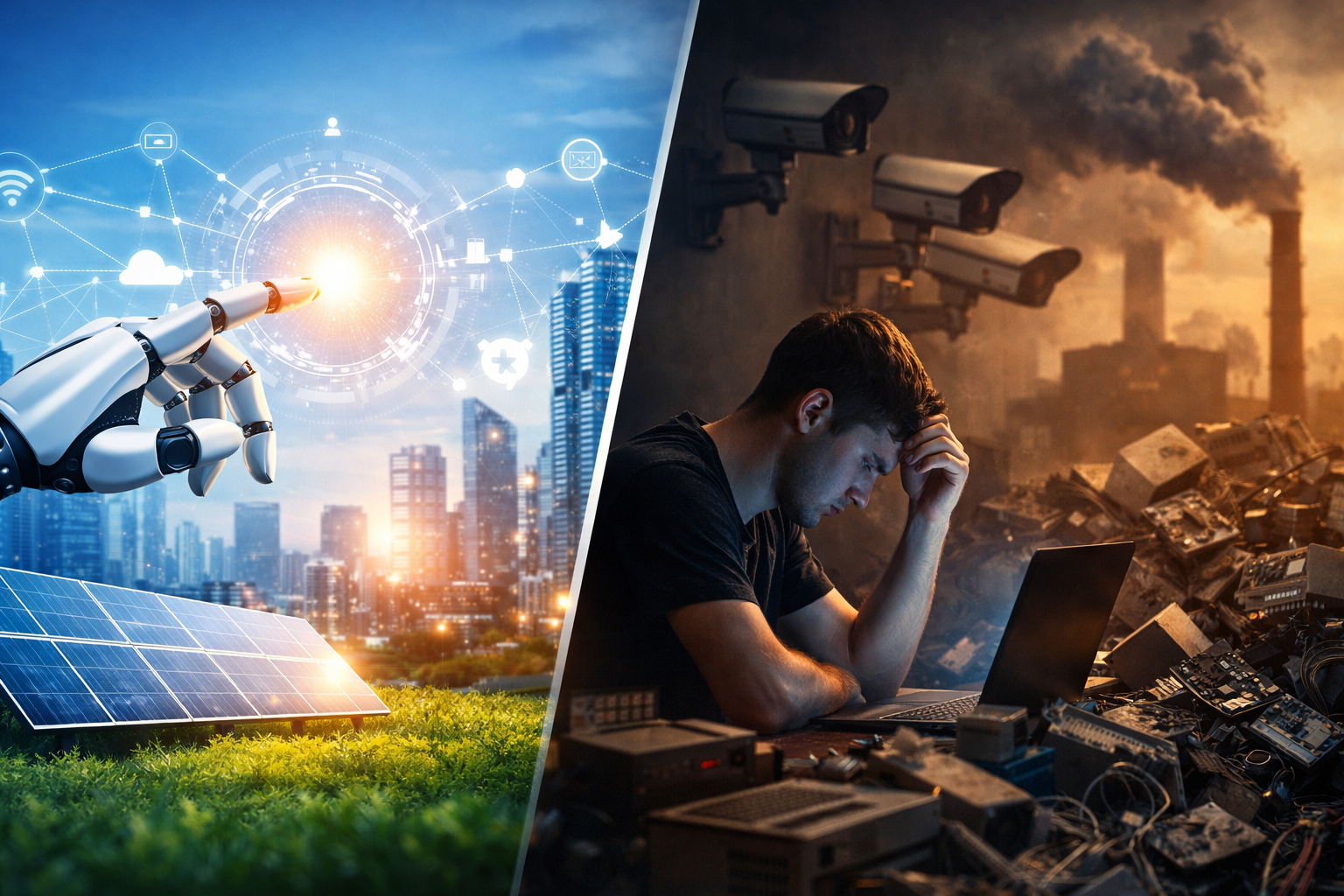
Technology has become inseparable from modern life. From smartphones in our pockets to artificial intelligence in hospitals and businesses, innovation shapes how we work, learn, communicate, and even think. While the benefits are undeniable, technology also introduces challenges that affect individuals, societies, and the planet.
This in-depth guide explores the advantages and disadvantages of technology in a clear, balanced, and practical way—helping you understand not just what technology does, but how it truly impacts our daily lives.
What Is Technology in Today’s World?
Tools, processes, and techniques developed with scientific understanding to address issues or boost productivity are referred to as technology. Today, it spans areas such as:
- Information and communication technology (ICT)
- Medical and healthcare technology
- Educational technology
- Industrial and manufacturing systems
- Artificial intelligence and automation
Understanding its pros and cons allows individuals and organizations to use technology more responsibly and effectively.
Advantages of Technology
1. Improved Communication and Connectivity
Technology has transformed communication from slow and limited to instant and global.
Key benefits include:
- Real-time messaging and video calls across continents
- Easier collaboration for remote teams
- Stronger connections with friends, family, and communities
This level of connectivity has reshaped business, education, and personal relationships.
2. Increased Efficiency and Productivity
Automation and digital tools help people complete tasks faster and with fewer errors.
Examples:
- Businesses use software to manage data, finances, and operations.
- Machines handle repetitive tasks in manufacturing.
- AI tools assist with research, analysis, and customer service.
As a result, organizations can focus more on creativity and strategic thinking.
3. Advancements in Healthcare
One of the most impactful advantages of technology is in medicine.
Notable improvements include:
- Early disease detection through advanced imaging
- Robotic-assisted surgeries with higher precision
- Telemedicine for remote diagnosis and consultation
- Wearable technology that tracks health in real time
These innovations save lives and improve the overall quality of care.
4. Easy Access to Information and Education
Technology has democratized knowledge.
- Online courses allow anyone to learn new skills.
- Search engines provide instant access to information.
- Digital libraries and educational apps support lifelong learning.
No matter where they are, professionals and students may now learn at their own pace.
5. Economic Growth and Innovation
Technology drives innovation, creating new industries and job opportunities.
- Development in domains such as data science, cybersecurity, and software development. Expansion of e-commerce and digital entrepreneurship
- Increased global trade through online platforms
When used strategically, technology strengthens economies and boosts competitiveness.
Disadvantages of Technology
1. Job Displacement and Skill Gaps
While technology creates jobs, it also replaces certain roles.
Challenges include:
- The need for manual labor is declining due to automation.
- Workers needing constant reskilling
- Job insecurity in traditional industries
Without proper training and adaptation, many people risk being left behind.
2. Overdependence and Reduced Human Interaction
Excessive reliance on technology can weaken real-world social skills.
- Face-to-face communication may decline.
- Increased screen time can affect mental well-being.
- Technology addiction can reduce focus and productivity.
Balance is essential to maintain healthy relationships and lifestyles.
3. Privacy and Security Risks
Digital systems collect massive amounts of personal data.
Major concerns include:
- Data breaches and cyberattacks
- Online surveillance and tracking
- Misuse of personal information
As technology advances, protecting privacy becomes increasingly complex.
4. Environmental Impact
The production and disposal of technology affect the environment.
- Electronic waste contributes to pollution.
- Data centers consume large amounts of energy.
- Resource extraction for devices harms ecosystems.
Sustainable practices are necessary to reduce long-term damage.
5. Digital Divide and Inequality
Not everyone benefits equally from technology.
- Limited access in rural or low-income areas
- High costs of devices and internet services
- Unequal digital literacy levels
This gap can deepen social and economic inequality if not addressed.
Benefits and Drawbacks of Technology in Everyday Life
| Communication | Instant global connection | Reduced personal interaction |
| Work | Higher productivity | Job displacement |
| Education | Flexible learning | Overreliance on screens |
| Healthcare | Better diagnosis and treatment | High costs and data risks |
| Environment | Smart energy solutions | E-waste and pollution |
How to Use Technology Responsibly
To maximize benefits while minimizing harm:
- Practice digital balance and limit screen time.
- Invest in cybersecurity and data protection.
- Support digital education and reskilling programs.
- Encourage sustainable tech production and recycling.
- Promote ethical use of emerging technologies.
Responsible usage ensures technology remains a tool for progress—not a source of problems.
Frequently Asked Questions
Is technology more beneficial or harmful?
Technology is neither wholly beneficial nor detrimental. How it is created, utilized, and governed determines its influence.
Can society function without technology?
Modern society heavily depends on technology, but maintaining core human skills and values remains essential.
How can individuals adapt to technological change?
Continuous learning, adaptability, and digital literacy are key to thriving in a technology-driven world.
Conclusion
The advantages and disadvantages of technology reveal a powerful truth: technology is a double-edged sword. It improves efficiency, connectivity, healthcare, and education, yet introduces challenges such as job displacement, privacy risks, and environmental concerns.